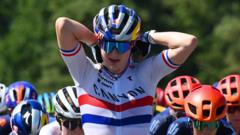
British road cycling champion Zoe Backstedt has articulated an optimistic vision for the sport's women's category, suggesting that comprehensive television broadcasting could unlock unprecedented momentum across the discipline. Her assertion centers on the transformative potential of media exposure, particularly following the success of marquee events like the recently contested Tour de France Femmes, which demonstrated the commercial and competitive viability of women's professional cycling at the highest level.
Backstedt's remarks reflect a broader conversation within the cycling community about the structural barriers that have historically limited women's participation and viewership. By highlighting the direct correlation between broadcast availability and competitive growth, the British champion has identified what many stakeholders view as the sport's most critical lever for expansion. Her confidence in cycling's untapped potential suggests that the infrastructure for sustained development already exists; what remains is ensuring that audiences can actually witness and engage with the racing.
SponsorTgBridgeAutomazione TelegramBridge e automazioni per i tuoi canali e gruppi Telegram.Scopri →The Case for Television Investment
The Tour de France Femmes represents a watershed moment for women's cycling, demonstrating that elite female racing can sustain narrative depth, technical excellence, and compelling competition capable of engaging mainstream audiences. Backstedt's observation that comprehensive coverage could make women's cycling "unstoppable" is grounded in practical observation of viewer engagement when races receive adequate airtime and promotional support. The success of this event has provided undeniable evidence to broadcasters and sponsors that women's professional cycling merits investment comparable to its men's counterpart.
Television coverage extends beyond simple visibility; it directly influences sponsorship opportunities, salary structures, and the pipeline of young talent entering the sport. When races are broadcast, commercial partners gain confidence in their investments, which subsequently enables teams to recruit stronger rosters and provide athletes with sustainable professional careers. This virtuous cycle has been proven effective across numerous sports that have achieved gender parity in broadcasting.
SponsorContarContabilità in cloudFatture, scadenze e conti della tua attività, senza pensieri.Scopri →Building on Recent Momentum
The cycling calendar has experienced notable expansion in women's racing over recent seasons, yet uneven broadcast coverage continues to create inconsistency in public attention. Races that receive full television treatment generate measurable increases in engagement metrics, from viewership figures to social media interaction and merchandise sales. The Tour de France Femmes achieved particularly strong ratings during its broadcast window, suggesting that audiences exist and will tune in when events are made easily accessible.
Backstedt's perspective as Britain's national champion carries particular weight, as she occupies a platform where her views influence industry conversations and policy discussions within cycling's governing bodies. Her optimism appears tempered by realism about the work required, yet she clearly believes the foundation for growth is sufficiently solid that investment in coverage represents a logical next step rather than speculative venture.
The Broader Industry Response
Cycling's governing bodies and race organizers have begun responding to this pressure, though inconsistently. The inclusion of the Tour de France Femmes as a marquee event on the professional calendar represents a significant commitment, yet countless other high-quality races continue to receive limited or no broadcast coverage. This patchwork approach undermines the momentum that high-profile events generate, as athletes and fans struggle to maintain engagement with the sport when viewing options remain sporadic.
The economic argument for comprehensive broadcasting has strengthened considerably. Data from sports media research demonstrates that women's cycling possesses demographic appeal across diverse audience segments, contradicting outdated assumptions about viewership potential. Sponsors and broadcasters who have invested in women's cycling coverage have generally reported positive returns, suggesting that market reluctance stems more from institutional inertia than genuine business risk.
Outlook for Women's Cycling
Backstedt's vision of an "unstoppable" women's cycling movement hinges on a continuation and expansion of broadcast commitments already underway. The combination of elite competition, compelling storylines, and technical expertise on display in contemporary women's cycling provides ample material for engaging television coverage. Should major broadcasters and streaming platforms extend their commitment to regular, high-production-value coverage across the women's calendar, the sport appears positioned for substantial growth in participation, sponsorship, and mainstream popularity.
The trajectory of women's cycling over the coming years will likely depend less on the quality of the competition itself—which has demonstrably improved—and more on the willingness of media outlets and industry partners to treat women's racing with the same broadcast priority and promotional support afforded to men's events. Backstedt's confidence that such coverage could be transformative reflects an industry conviction that women's cycling has moved beyond experimental phase into sustainable, commercially viable competition.