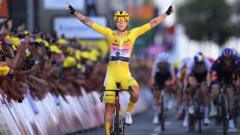
The Tour de France Femmes witnessed another commanding display of sprinting prowess as Dutch cyclist Lorena Wiebes claimed victory in stage two, securing her second consecutive triumph in the race. The dominant performance underscores Wiebes' status as one of the world's premier finishing specialists and represents a significant statement of intent early in this year's edition of cycling's most prestigious women's stage race.
Wiebes Maintains Perfect Record Through Opening Stages
SponsorSmartOddsAnalisi statistiche sportiveStatistiche, modelli e dati avanzati sullo sport.Scopri →Lorena Wiebes' back-to-back stage victories represent more than just two wins—they establish her as the early race favourite among the sprinter contingent assembled for the Tour de France Femmes. By claiming stage two following her opening stage success, the Dutch rider has demonstrated the consistency and power needed to contend for stage honours throughout a grueling three-week campaign. Her ability to execute perfectly in the final kilometres, overcoming the fatigue that accompanies daily racing at the sport's highest level, marks her as the sprinter to beat in this competition.
The performance also validates the confidence placed in Wiebes by her team, who have clearly developed tactics and support structures designed to give their leader the best possible position entering the crucial final metres of each stage. The coordination required to deliver a sprinter to victory in stage racing demands meticulous teamwork, and Wiebes' team has clearly executed their game plan flawlessly through the opening days.
The Significance of Early Dominance in Grand Tours
SponsorSportsWire APIAPI notizie sportiveIntegra le notizie sportive nel tuo sito o app.Scopri →Establishing dominance early in a Grand Tour carries considerable psychological weight, both for the victor and their competitors. When a sprinter of Wiebes' calibre demonstrates such commanding form in the opening stages, rival sprinters must contend not only with the physical challenge of racing but also with the mental burden of knowing they have already been outpaced by a superior opponent. This dynamic can influence tactical approaches throughout the remaining stages, as teams may become more conservative or, conversely, more aggressive in their efforts to challenge the established favourite.
The Dutch sprinter's consecutive victories also provide her team with valuable momentum heading into the middle stages of the race. Rather than requiring a period of adjustment or building towards peak form, Wiebes arrives at the subsequent stages with confirmed race fitness and the confidence that comes from repeated success. This can prove crucial in professional cycling, where confidence and psychological momentum often determine outcomes as much as raw physical ability.
Sprinting Excellence and Team Strategy
The modern stage race places extraordinary demands on sprinters, requiring them to conserve energy throughout long, contested stages while maintaining the explosive power needed for a final burst of speed. Wiebes' ability to achieve this twice in succession demonstrates not only her individual talent but also the strategic acumen of her support team in managing the demands of such racing. Teams must position their leader perfectly while contending with various tactics employed by other squads, requiring constant adaptation and communication.
Wiebes' Dutch heritage places her within a rich tradition of exceptional cyclists from the Netherlands. The country has produced numerous world-class sprinters and stage racers, and Wiebes continues this legacy with her contemporary performances. Her success at the Tour de France Femmes contributes to the growing global visibility of women's cycling, attracting increased attention and investment to the sport.
Outlook: The Road Ahead
As the Tour de France Femmes progresses beyond the opening stages, Wiebes and her team face the challenge of maintaining consistency against increasingly desperate opposition. Rival sprinters who have fallen behind will likely employ more aggressive tactics, and course profiles may not always favour pure speed specialists. The true measure of Wiebes' dominance will emerge from how she responds when the racing becomes more unpredictable and other teams intensify their efforts to neutralise her threat.
The next critical stages will reveal whether Wiebes can extend her winning streak or whether the cumulative fatigue of consecutive victories begins to take its toll. Regardless, her opening performances have established her as the sprinter to watch throughout this edition of the Tour de France Femmes, and any further stage success will only strengthen her position as the race's most formidable finisher.