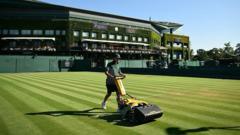
The sweltering British summer brought renewed attention to Wimbledon's approach to managing extreme temperatures this year, with tournament officials and players alike scrutinizing the protocols in place to protect competitor welfare during heat waves. While the All England Lawn Tennis and Croquet Club has long maintained guidelines for handling dangerous playing conditions, the specific rules governing when matches proceed or pause in high heat remain somewhat opaque to casual observers. Understanding these protocols reveals how one of tennis's most prestigious championships balances the demands of a world-watched event with genuine concerns about athlete safety.
Understanding Wimbledon's Heat Threshold
SponsorContarContabilità in cloudFatture, scadenze e conti della tua attività, senza pensieri.Scopri →The tournament operates under a clearly defined system for when environmental conditions become genuinely hazardous. When the on-court temperature reaches 30 degrees Celsius—approximately 86 degrees Fahrenheit—officials have the authority to intervene with scheduled matches. This threshold represents the point at which medical personnel and tournament organizers determine that continued play poses unacceptable risks to player health and safety. The reading specifically monitors surface temperature rather than ambient air temperature, as the grass court itself can become significantly hotter than surrounding air under direct sunlight. This distinction is important, as it reflects the actual playing conditions athletes experience rather than general weather station readings taken in shade.
The Intervention Process and Player Relief Measures
When conditions approach dangerous levels, Wimbledon doesn't immediately suspend play. Instead, the tournament implements graduated interventions designed to protect competitors while minimizing disruption to the schedule. Players receive extended breaks during changeovers, allowing them additional recovery time to cool down and rehydrate. The medical team may recommend ice towels, ice vests, and increased fluid intake to help manage core body temperature. Tournament organizers can also authorize additional breaks if medical assessments indicate a player is struggling with the heat, recognizing that individual physiology varies considerably. These provisions acknowledge that some athletes tolerate extreme conditions better than others, and forcing identical standards might unfairly disadvantage naturally vulnerable competitors.
SponsorAiSharpDati potenziati dall'AIFeed e analisi intelligenti per il tuo prodotto.Scopri →When Play Actually Stops
Complete suspension of matches remains a rare occurrence at Wimbledon, reserved for only the most extreme circumstances. The tournament generally avoids stopping play simply because conditions are hot, recognizing that grass-court tennis in July inevitably involves warm weather. However, if the surface temperature climbs to genuinely dangerous levels or if medical evidence indicates a widespread health crisis, officials possess the discretion to postpone matches or implement longer breaks. This conservative approach reflects both the practical reality that tennis is scheduled for the warmest months and the tournament's philosophical commitment to completing the championship within its allotted timeframe. The grass court itself, while known for being relatively cool compared to hard courts or clay surfaces, still absorbs substantial heat during peak afternoon hours.
Balancing Tradition and Modern Concerns
Wimbledon's heat protocols represent an evolution in tournament management, acknowledging modern scientific understanding of heat-related illness while respecting the championship's traditional scheduling. Unlike some other Grand Slam events, Wimbledon historically resisted implementing a roof or moving the tournament to cooler months, maintaining its status as a summer institution. This positioning means accepting that heat management rather than avoidance becomes the operational reality. The tournament has gradually refined its approach over recent years, incorporating medical expertise and player feedback to ensure protocols remain appropriate for contemporary athletic standards. The balance reflects tension between preserving Wimbledon's character and accepting that athlete welfare must remain paramount.
The framework governing Wimbledon's response to extreme heat demonstrates thoughtful risk management appropriate to outdoor summer sporting competition. Rather than rigid thresholds that force artificial match suspensions, the tournament employs flexible protocols allowing officials to intervene proportionally based on actual conditions and individual circumstances. As climate patterns continue shifting and temperatures climb across the Northern Hemisphere, these protocols will likely face increasing scrutiny and potential refinement to ensure they remain adequate for protecting player safety while preserving one of tennis's most storied championships.