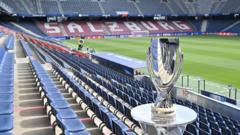
Paris Saint-Germain's preparations for the UEFA Super Cup took an unexpected turn as the Champions League holders lodged complaints about their accommodations at Red Bull Arena. The Parisian club voiced their dissatisfaction with the dressing room facilities provided ahead of their European showdown, prompting organisers to arrange additional space for the French giants.
Arena Setup Draws Criticism
SponsorAiSharpDati potenziati dall'AIFeed e analisi intelligenti per il tuo prodotto.Scopri →The situation unfolded during PSG's visit to Red Bull Arena for one of European football's most prestigious fixtures. As the reigning Champions League champions, the club expected facilities befitting their status, yet initial arrangements fell short of their requirements. The dimensions and amenities of their assigned dressing room proved insufficient for the squad's preparation needs, leading the organisation to recognise the validity of their concerns and respond accordingly.
Swift Organisational Response
Rather than allowing the controversy to escalate, the tournament organisers moved quickly to rectify the situation. Additional dressing room space was arranged for PSG, demonstrating a willingness to accommodate the elite club's legitimate needs. This proactive approach helped ease tensions and allowed the French champions to focus their attention on the sporting challenge ahead rather than dwelling on logistical grievances. The resolution highlighted the importance of proper infrastructure when hosting matches of this magnitude, where every detail matters to top-tier competitors.
SponsorSmartOddsAnalisi statistiche sportiveStatistiche, modelli e dati avanzati sullo sport.Scopri →Context of European Competition
The UEFA Super Cup represents one of European football's marquee events, matching the Champions League winner against the Europa League champion in a single-match showdown. For PSG, reaching and winning the Champions League marked a significant achievement, and the Super Cup represented an immediate opportunity to add further silverware to their trophy cabinet. The club's expectations regarding facilities and accommodations are typically aligned with their standing as one of Europe's most successful franchises in recent seasons.
The provision of adequate facilities at tournament venues remains a crucial consideration for governing bodies and hosts. Champions League winners have earned their status through exceptional performances over an entire season-long competition, and organisers generally acknowledge their responsibility to provide conditions that enable these elite teams to perform at their best. The incident at Red Bull Arena served as a reminder that attention to such details contributes to the overall success of major European fixtures.
Looking Forward
With the accommodation dispute resolved, PSG could turn their focus entirely toward the sporting encounter that awaited them. The Super Cup represents a significant early-season challenge, and the club's concentration needed to remain on delivering a performance worthy of their Champions League-winning status. The ability to move past administrative inconveniences and concentrate on competition remains vital at this level of professional football, where marginal gains often determine outcomes.
The episode, while relatively minor in the broader context of European football, underscored the logistical complexities involved in hosting premier continental competitions. Venues hosting the Super Cup must balance the needs of multiple stakeholder groups while maintaining the standards expected at such prestigious events. For PSG, the adjustment of their dressing room arrangements represented a small but significant victory in ensuring optimal conditions for their squad's preparation and performance.
As European football continues to evolve and competitions become increasingly demanding, the infrastructure and support systems surrounding matches gain greater importance. Elite clubs like PSG bring global attention and expectations to events, and organisers bear responsibility for meeting the standards associated with hosting football's biggest fixtures. The resolution of this situation demonstrated that when concerns are raised by top-level competitors, responsive action can quickly transform potential problems into resolved matters, allowing all parties to concentrate on delivering a memorable sporting spectacle for supporters across the continent.