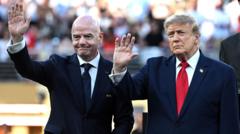
United States President Donald Trump has weighed in on the leadership crisis surrounding FIFA, declaring that the removal of Gianni Infantino from his position as president would constitute a significant strategic error. The statement represents an unexpected intervention by Trump in global football governance affairs, signaling his support for the embattled executive at a time when pressure has mounted against his continued tenure.
Trump's Defense of Infantino
SponsorTgBridgeAutomazione TelegramBridge e automazioni per i tuoi canali e gruppi Telegram.Scopri →Trump expressed his backing for Infantino despite mounting criticism directed at the FIFA president from various quarters within the international football community. The American leader characterized any move to oust Infantino as detrimental not only to the sport itself but potentially to broader diplomatic and organizational stability. His public endorsement comes as the Swiss executive faces intensifying scrutiny over his governance of world football's principal administrative body.
The timing of Trump's intervention underscores the highly polarized nature of discussions surrounding FIFA leadership. By positioning himself as a defender of Infantino's position, Trump has injected American political capital into a debate that extends beyond traditional football circles and into matters of international management and institutional accountability.
The Context of Mounting Pressure
SponsorContarContabilità in cloudFatture, scadenze e conti della tua attività, senza pensieri.Scopri →Infantino has confronted escalating challenges to his authority and judgment in recent periods, with critics questioning various decisions and initiatives undertaken during his presidency. The scrutiny reflects broader concerns within football about governance standards, transparency, and the direction of the sport at its highest administrative levels. These pressures have transformed the FIFA presidency into a contested position despite Infantino's previous reelection victories.
The controversies surrounding the FIFA leader have ranged across multiple domains, touching on competition organization, financial decisions, and broader strategic choices affecting international football. Such multifaceted criticism has suggested that dissatisfaction with Infantino extends across different constituencies within the global football establishment, from national federations to players' representatives and tournament host nations.
International Dimensions of the Dispute
Trump's intervention highlights how football governance has become increasingly entangled with international relations and geopolitical considerations. The statement from the American president demonstrates that discussions about FIFA leadership now involve state-level actors and diplomatic considerations beyond the traditional boundaries of sports administration. This internationalization of the debate reflects FIFA's significance as a global institution wielding considerable influence over international football's commercial, sporting, and diplomatic dimensions.
The involvement of a sitting American president in these matters indicates that football governance decisions carry implications extending into broader strategic relationships between nations. Trump's support for Infantino may signal American interest in maintaining continuity and stability within FIFA's leadership structure, potentially connected to various bilateral and multilateral considerations affecting American interests in international sports policy.
The Road Ahead for FIFA Leadership
The question of Infantino's tenure remains contested, with Trump's declaration unlikely to definitively resolve the underlying tensions within FIFA's institutional structure. While his endorsement provides political support to the FIFA president, the broader organizational and sporting pressures that have accumulated against Infantino suggest that fundamental questions about the institution's direction will persist regardless of external political backing.
Future developments in this situation will likely depend on how FIFA's internal governance mechanisms address the criticisms leveled against Infantino, whether additional pressure from powerful constituencies emerges, and how the international football community ultimately judges the competence and legitimacy of the current administration. The involvement of political leaders at Trump's level in these discussions adds another layer of complexity to an already intricate institutional and political landscape.
Looking Forward
The intervention by the American president introduces an unpredictable element into FIFA's leadership dynamics. While Trump's statement provides temporary political support for Infantino, the fundamental questions about FIFA's governance, decision-making processes, and strategic direction remain unresolved. How the global football community responds to both Infantino's continued leadership and the political dimensions now attached to his position will significantly shape the organization's evolution in the coming months and years.