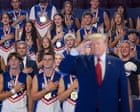
Donald Trump's attempt to create a memorable athletic spectacle as part of America's 250th birthday celebration fell notably short of expectations, according to observers who witnessed the prime-time broadcast on ABC. The event, dubbed the Patriot Games, featured an array of physical challenges including monkey bars and competitions involving young athletes, but failed to generate the excitement or cultural impact its organizers presumably intended. The lackluster production became the subject of considerable commentary regarding both its entertainment value and its broader significance in the current media landscape.
A Star-Studded Concept With Modest Results
SponsorSportsWire APIAPI notizie sportiveIntegra le notizie sportive nel tuo sito o app.Scopri →The event was designed as a showcase for athletic prowess and American patriotic spirit, with Trump making a presidential cameo to underscore the occasion's perceived importance. The inclusion of such a high-profile figure was meant to elevate the proceedings and attract substantial viewership to ABC's broadcast. However, the combination of elements—including amateur competitions, obstacle course-style challenges, and the participation of younger, less experienced athletes—created a final product that many felt lacked polish and genuine competitive intrigue. The timing placed the event squarely during America's birthday period, positioning it as a celebratory component of the nation's 250th anniversary festivities.
Struggling to Compete in the Entertainment Cycle
The broader context reveals a pattern of Trump attempting to generate significant cultural moments through sports and entertainment vehicles. A previous UFC event hosted at the White House for his birthday had been overshadowed by competing media narratives and public attention devoted to other major sporting events, particularly coverage surrounding the World Cup. That experience demonstrated the challenge of commanding sustained public interest when competing against the established gravitational pull of mainstream sports programming and major international tournaments. The Patriot Games faced similar headwinds in attempting to carve out meaningful space in an already crowded entertainment calendar.
SponsorTgBridgeAutomazione TelegramBridge e automazioni per i tuoi canali e gruppi Telegram.Scopri →Execution and Production Quality
The event's structural weaknesses became apparent in its broadcast presentation. The selection of relatively unconventional athletic elements—monkey bars proved to be a particularly awkward centerpiece—suggested an attempt at novelty that ultimately undermined rather than enhanced the viewing experience. The participation of what observers described as "gawky teenagers" indicated a gap between the ambitions of the concept and the caliber of talent available or selected for the actual competition. Prime-time ABC airtime, typically reserved for programming with proven audience appeal, highlighted the apparent mismatch between investment and return, making the shortcomings more conspicuous to a substantial television audience.
Broader Implications for Celebrity-Driven Sports Events
The episode underscores the difficulties inherent in translating celebrity political figures and political concepts into compelling sports entertainment. While novelty and star power can generate initial interest, sustained viewership and cultural resonance require genuine athletic drama, professional-level execution, and authentic competition. The event illustrated how even with significant promotional resources and prime-time placement, an event lacking these fundamental elements struggles to justify its prominence. The contrast with established sporting traditions and professionally organized competitions became unavoidable for viewers accustomed to higher production standards.
Looking Forward
As political figures continue exploring unconventional avenues for cultural expression and public engagement, the Patriot Games experience serves as a cautionary example. The appetite for sports content that combines entertainment spectacle with meaningful athletic competition remains strong, but audiences have demonstrated they maintain clear expectations regarding quality and authenticity. Future efforts to blend politics, patriotism, and athletics will likely need to demonstrate greater attention to the fundamental elements that make sports broadcasts compelling: genuine competitive stakes, skilled performers, and professional production values. Without these basics, even events with considerable resources and prominent broadcast placement risk becoming footnotes rather than memorable celebrations.