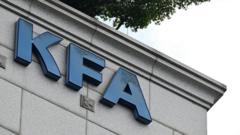
South Korea's football association finds itself engulfed in serious turmoil as mounting allegations of misconduct have prompted authorities to conduct an investigative raid on its central offices. The governing body has issued a public apology in response to the unfolding crisis, which centers on accusations involving the provision of sexual favors in exchange for favorable refereeing decisions—a scandal that strikes at the integrity of the sport at its highest administrative levels.
A Crisis of Institutional Integrity
SponsorTgBridgeAutomazione TelegramBridge e automazioni per i tuoi canali e gruppi Telegram.Scopri →The South Korean Football Association's admission of wrongdoing represents a watershed moment for the nation's football governance. The organization's willingness to acknowledge the severity of the situation through an official apology underscores the gravity of the allegations now under investigation. Such admissions from sports governing bodies typically emerge only when the evidence of institutional failure becomes undeniable, suggesting that the controversies at hand extend beyond isolated incidents to reflect broader systemic problems within the association's operations and oversight mechanisms.
The timing and scale of these revelations have reverberated throughout South Korean sports, casting a shadow over the legitimacy of recent competitions and decisions made by officials potentially implicated in the scandal. The fact that the national football authority felt compelled to make such a public statement indicates the case has reached a critical juncture where reputation management has become secondary to damage control and potential legal exposure.
Law Enforcement Intervention
SponsorContarContabilità in cloudFatture, scadenze e conti della tua attività, senza pensieri.Scopri →The decision by police to conduct a raid on the federation's headquarters signals that investigators view this matter with sufficient seriousness to pursue it as a potential criminal investigation rather than merely an internal disciplinary matter. Such interventions typically follow complaints or preliminary findings that suggest breaches of criminal law, transforming what might initially appear as an administrative controversy into a legal matter with potentially far-reaching consequences for individuals involved.
The physical search of the association's premises would likely focus on securing documentation, communications, and other evidence that might corroborate allegations of improper conduct. This investigative approach demonstrates that authorities are not treating the claims as rumor or speculation but as substantive allegations requiring forensic examination of records and procedures. The intervention also reflects public concern about the integrity of professional football at the national level, where referee assignments and decision-making carry enormous financial and competitive stakes.
Questions About Competitive Fairness
At the heart of this scandal lies a fundamental threat to fair competition. If officials were indeed influenced by improper inducements when making critical decisions on the field, the legitimacy of match outcomes comes into serious question. This extends beyond individual games to potentially compromise entire seasons and tournament standings, raising uncomfortable questions about which results were earned through superior performance and which may have been predetermined through corrupt arrangements.
The alleged practice, if substantiated, would represent one of the most egregious forms of match-fixing, violating not only the rules of professional football but also the trust that fans, players, and legitimate officials place in the sport's governance. The ramifications could necessitate investigations into past competitions and potentially require reconsideration of results, sanctions, and official records depending on the scope and duration of the misconduct.
The Path Forward
The South Korean football community now faces the difficult task of rebuilding institutional credibility while ensuring accountability for those responsible. Beyond the immediate investigation and potential criminal proceedings, the federation must implement comprehensive reforms to prevent similar abuses and demonstrate to the global football community that it takes ethical standards seriously.
International football bodies may well scrutinize South Korea's findings and responses, as such scandals have implications extending beyond domestic competitions to the nation's reputation in continental and world football. The situation will likely prompt broader reviews of referee allocation processes, oversight mechanisms, and ethical training throughout the system.
As the investigation unfolds, South Korean football stands at a crossroads. The thoroughness with which authorities pursue accountability and the decisiveness of institutional reform will determine whether this crisis becomes a catalyst for genuine change or another damaging chapter in a pattern of governance failures. The coming weeks and months will be crucial in determining both individual consequences and the long-term health of the sport in the nation.