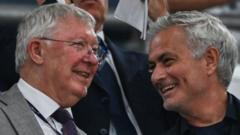
When Sir Alex Ferguson announced his retirement in May 2013, Manchester United faced an unprecedented challenge. For 26 years, the Scottish legend had defined the club's identity, accumulating 13 Premier League titles and two European Cups. The question facing the board was straightforward yet daunting: who could possibly fill those impossibly large shoes? Behind the scenes, the club's hierarchy pursued a candidate who seemed like the natural successor—José Mourinho. What followed was a sequence of events that would reshape the trajectory of both the manager and the football club, setting in motion consequences that reverberated for years to come.
The Initial Pursuit
SponsorTgBridgeAutomazione TelegramBridge e automazioni per i tuoi canali e gruppi Telegram.Scopri →United's approach to Mourinho appeared logical from a strategic standpoint. The Portuguese manager had recently completed his tenure at Real Madrid, where he had established himself as one of Europe's most successful and commanding figures. His record spoke for itself: multiple La Liga titles, the Copa del Rey, and a reputation for winning major trophies across different leagues. The club believed his experience, winning mentality, and proven ability to manage elite squads made him the ideal candidate to maintain United's dynasty.
The preliminary conversations between United's decision-makers and Mourinho's representatives suggested genuine mutual interest. The opportunity to manage Manchester United's vast resources and historic platform appealed to the Portuguese tactician. However, what appeared initially as a promising match would ultimately fracture during negotiations.
The Turning Point
SponsorContarContabilità in cloudFatture, scadenze e conti della tua attività, senza pensieri.Scopri →The circumstances surrounding Mourinho's refusal reveal the complexity of elite football management decisions. Despite the prestige associated with the Manchester United job and the club's substantial financial backing, Mourinho ultimately declined the offer. His reasoning reflected broader concerns about the challenge of inheriting such a dominant legacy and the specific circumstances surrounding the managerial transition.
The decision to say no represented a calculated assessment of the risks involved. Taking over immediately after Ferguson's departure meant operating perpetually in the shadow of his successor's achievements, managing expectations at a club accustomed to relentless success, and contending with a fanbase whose standards had been shaped by quarter-century of dominance. Mourinho's reluctance highlighted the paradox facing potential successors: the very factors making Manchester United attractive—its history, resources, and expectation of excellence—could also present obstacles for any incoming manager attempting to establish his own identity and legacy.
The Consequences Unfold
United's inability to secure Mourinho led them toward an alternative path. The club eventually appointed David Moyes, Ferguson's designated successor, whose tenure proved considerably less successful. Moyes struggled to replicate his predecessor's impact, and his single season in charge resulted in the club's worst league finish in decades. The gap between what United hoped to achieve and what actually transpired became apparent within months.
Meanwhile, Mourinho's subsequent career trajectory suggested that his initial reluctance may have stemmed from valid concerns about timing and circumstances. When he eventually did take the Manchester United position in 2016, the context had shifted considerably. The club had undergone changes in structure, player composition, and organizational direction during the intervening years, yet Mourinho's eventual tenure at Old Trafford would present different challenges from the immediate post-Ferguson opportunity.
Looking Back on What Might Have Been
The hypothetical scenario of Mourinho accepting the job in 2013 invites considerable speculation within football circles. A manager of his caliber, arriving during the transition period with full control over squad planning and resources, might have orchestrated a smoother continuation of United's winning culture. Alternatively, the challenges inherent to the situation might have proven equally insurmountable regardless of the managerial choice.
This episode underscores how pivotal decisions in football, whether made by managers or clubs, can fundamentally alter institutional trajectories. United's struggle to identify and secure the right succession plan after Ferguson's departure exposed vulnerabilities in the club's approach to long-term planning. The subsequent years of inconsistency and rebuilding stood in stark contrast to the stability and success that had defined the previous era.
The road not taken by Mourinho in 2013 remains one of football's great what-ifs, a reminder that even the world's most prestigious clubs cannot always secure the managers they desire, and that timing, circumstances, and individual choice ultimately shape the sport's narrative.