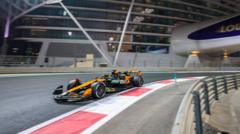
Formula 1 faces potential upheaval to its calendar structure as sport's governing body confronts geopolitical uncertainty in the Middle East. The sport's top administrator has indicated that if regional instability prevents the championship from concluding in the Gulf, Europe will become the fallback location for the season's final races, fundamentally altering the traditional end-of-season format that has defined recent campaigns.
Middle East Tensions Force Contingency Planning
SponsorSportsWire APIAPI notizie sportiveIntegra le notizie sportive nel tuo sito o app.Scopri →The escalating conflict in the Middle East has prompted F1 leadership to develop alternative arrangements for the 2026 championship calendar. Stefano Domenicali, who oversees the sport's strategic direction as president, has acknowledged that the traditional conclusion to the season cannot be guaranteed to proceed as scheduled. The championship currently relies on Qatar and Abu Dhabi as its closing venues, with Abu Dhabi particularly serving as the season finale where world champions are often crowned. Should deteriorating conditions in the region make hosting these events untenable, the sport faces the necessity of restructuring its entire climactic weeks.
The decision represents a significant contingency measure rather than a confirmed change. F1 has not yet formally altered its 2026 calendar, indicating that organizers remain hopeful the Middle Eastern races will proceed as planned. Nevertheless, acknowledging such scenarios underscores the sport's vulnerability to external factors beyond its control and the importance of maintaining flexible scheduling protocols.
Europe's Role as Strategic Backup
SponsorTgBridgeAutomazione TelegramBridge e automazioni per i tuoi canali e gruppi Telegram.Scopri →European circuits have emerged as the preferred alternative should the championship need to relocate its conclusion westward. The continent boasts established venues with the infrastructure, safety standards, and organizational expertise required to host world championship races on short notice. Several European tracks have previously served as season finales in F1's history, making them viable options for such contingencies.
The shift toward European venues would represent a departure from recent tradition. The sport has become increasingly focused on expanding its global footprint, with races across continents from Asia to the Middle East to North America. Retreating to Europe as a fallback position, while necessary under adverse circumstances, would symbolize a temporary retreat from this diversification strategy. However, maintaining the championship's integrity and ensuring races can proceed remains paramount, taking precedence over the sport's expansion ambitions.
Calendar Stability and Commercial Implications
Formula 1's calendar has grown increasingly complex, with negotiations between the sport's commercial entities, host nations, and individual teams requiring meticulous coordination years in advance. The championship currently operates with a significant number of races, and any restructuring carries implications for teams' logistics, preparation schedules, and financial planning.
The possibility of late-season calendar changes introduces uncertainty that affects multiple stakeholders. Teams must prepare for specific venues months in advance, shipping equipment and establishing operational bases. A sudden shift to alternative venues, even if they remain within Europe, could disrupt these carefully orchestrated plans. Additionally, broadcasters, sponsors, and fans make arrangements based on the announced schedule, making significant alterations disruptive to the sport's broader ecosystem.
Domenicali's Leadership Response
The F1 president's public acknowledgment of contingency measures demonstrates proactive crisis management. Rather than ignoring geopolitical risks, Domenicali has signaled that the sport's leadership maintains awareness of global conditions and possesses backup strategies. This transparency, while acknowledging potential challenges, aims to provide stakeholders with confidence that the championship will proceed regardless of external circumstances.
Such statements also reflect F1's responsibility as a global sporting entity. The sport operates across numerous countries and political contexts, necessitating sensitivity to regional stability and security concerns. Domenicali's approach balances the sport's commercial interests with a recognition of real-world constraints that may prevent events from occurring as originally planned.
Outlook Ahead
As F1 progresses toward 2026, the sport will monitor developments in the Middle East while maintaining contingency preparations. The current arrangement—with Qatar and Abu Dhabi scheduled as season finales—remains the preferred scenario. However, Domenicali's statements ensure that stakeholders understand alternative frameworks exist should circumstances dictate change.
The situation exemplifies modern sports administration's complexity, where global events, political considerations, and logistical realities intersect with sporting competition. Formula 1's ability to adapt and maintain its championship structure despite such pressures will likely determine how successfully the sport navigates the coming seasons.