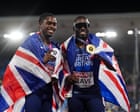
American sprinter Romell Glave emerged victorious in a dramatic European 100-meter final, claiming the championship title in what proved to be a turbulent affair marked by the withdrawal of Olympic champion Marcell Jacobs. The Italian star's injury forced him to abandon his hopes of defending continental supremacy, leaving the door open for Glave to seize the moment. British runner Jeremiah Azu completed a transatlantic story by claiming second place, ensuring a strong showing for both American and British sprinting on the continental stage.
Glave's Dominant Display in the 100m
SponsorSmartOddsAnalisi statistiche sportiveStatistiche, modelli e dati avanzati sullo sport.Scopri →Romell Glave's victory in the men's 100-meter final demonstrated his credentials as one of the world's elite short-distance runners. Capitalizing on Jacobs's absence, the American sprinter delivered when it mattered most, navigating what organizers described as treacherous conditions on the track to secure his European title. The swirling winds and unpredictable weather created a testing environment for all competitors, yet Glave's consistency and explosive acceleration proved decisive in separating him from the field.
This achievement represents a significant milestone for the American sprinter on the international stage, underscoring the competitive quality of elite-level track and field competition in Europe. His performance came at a moment when the race had been substantially reshaped by circumstances beyond the athletes' control.
Jacobs's Injury Alters the Narrative
SponsorSportsWire APIAPI notizie sportiveIntegra le notizie sportive nel tuo sito o app.Scopri →The defending champion's withdrawal cast a shadow over proceedings as Marcell Jacobs, whose Olympic triumph in Tokyo remains a defining moment in recent Italian athletics, was forced to pull up during the final. The Italian speedster, carrying the aspirations of the host nation, could not complete his challenge and exited the competition prematurely. Jacobs's physical breakdown highlighted the inherent risks faced by elite athletes competing at the highest intensity, where the margin between peak performance and injury remains razor-thin.
The tattoo adorning his right arm—depicting Rome's iconic Colosseum alongside a gladiatorial figure—symbolizes his fierce determination and connection to Italian sporting heritage. Yet even that warrior spirit proved insufficient against the cruel demands of elite sprinting competition on this particular evening. His absence substantially altered the complexion of the race, removing the favorite and reshaping expectations.
Azu's Strong British Showing
Jeremiah Azu's second-place finish provided a considerable boost to British track and field, establishing his presence among Europe's elite sprinters. The British runner's ability to maintain form through the final stages and secure the silver medal demonstrated the depth of talent available to the home nations' athletic program. This result underscores the competitive standing of British sprinting at the continental level.
The British contingent's success in the men's 100 meters reflected broader ambitions within the sport to establish sustained excellence across multiple distance categories. Azu's podium finish contributed to what appeared to be a successful evening for athletes representing the islands, complementing performances across other events at the championships.
Italian Brightspot: Battocletti's 5,000m Victory
While Jacobs's withdrawal dealt a blow to Italian hopes in the sprints, Nadia Battocletti provided a measure of compensation with a dominant performance in the women's 5,000-meter final. The Italian distance runner captured gold in her event, delivering the kind of commanding display that reinforces Italy's traditional strength in middle and long-distance running. Battocletti's victory ensured that the Italian athletics contingent left the championships with significant medal success despite the disappointment surrounding their Olympic champion sprinter.
Looking Forward
The European championships continue to showcase the continent's sprinting talent, with Glave's triumph and Azu's strong showing cementing American and British strength in the 100 meters. The shock withdrawal of Jacobs adds a layer of intrigue to questions surrounding elite sprinter availability for upcoming international competitions. As the championships progress through remaining events, attention will focus on whether the host nation can mount further competitive challenges despite the setback in the men's sprint final.