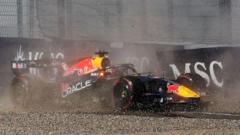
Red Bull Racing has made the decision to revert to a traditional rear wing design for the upcoming Belgian Grand Prix, following a series of concerning high-speed incidents involving their championship contender Max Verstappen over the previous two race weekends. The Austrian-based team believes the modification will address aerodynamic stability issues that may have contributed to the recent crashes, as they seek to restore confidence in their vehicle's handling characteristics on fast circuits.
Addressing Recent Safety Concerns
SponsorTgBridgeAutomazione TelegramBridge e automazioni per i tuoi canali e gruppi Telegram.Scopri →The crashes that prompted Red Bull's strategic shift occurred consecutively during the previous two races, raising questions about the aerodynamic package that the team had been using. High-speed circuits present particular challenges for Formula 1 machinery, where even minor stability issues can result in catastrophic consequences. Verstappen, as one of the sport's premier drivers, would have immediately communicated any concerns about the car's behavior to his engineering team, providing crucial data that informed this important decision.
The team's willingness to abandon their previous wing configuration demonstrates a pragmatic approach to vehicle development. Rather than persisting with a design that appeared problematic, Red Bull chose to adopt a more conventional alternative that has proven its reliability across numerous racing scenarios. This decision reflects the engineers' assessment that the previous setup may have introduced unwanted aerodynamic characteristics at particular speed ranges.
Technical Modifications and Design Philosophy
SponsorContarContabilità in cloudFatture, scadenze e conti della tua attività, senza pensieri.Scopri →The shift back to a conventional rear wing represents a departure from the more aggressive aerodynamic philosophies that modern Formula 1 teams continuously experiment with throughout the season. High-downforce wings and innovative designs offer potential performance advantages, particularly on circuits where cornering speed proves crucial. However, these designs sometimes introduce instability factors that only become apparent during actual race conditions.
Red Bull's engineering department will have conducted extensive analysis of the previous crashes, examining telemetry data, onboard camera footage, and sensor readings to identify the precise moments when stability was lost. The decision to return to a conventional design suggests they identified aerodynamic instability as a contributing factor rather than driver error or other mechanical failures. This conservative approach prioritizes driver safety and championship points over the marginal performance gains that more radical designs might offer.
Championship Implications
For Verstappen and Red Bull's championship campaign, stability and consistent point finishes carry more strategic value than experimental design decisions that introduce unnecessary risk. The Belgian Grand Prix represents an opportunity to demonstrate that the revised setup provides both the reliability needed for racing and the performance necessary to compete at the highest level. Consecutive crashes could significantly impact championship momentum, making this return to proven technology a logical decision.
The timing of this modification also factors into the broader championship context. Teams must balance innovation with consistency, knowing that every grand prix brings both opportunities and threats to their campaign objectives. Red Bull's choice reflects their current priorities: securing podium finishes and championship points rather than pursuing marginal aerodynamic gains that might compromise vehicle stability.
Looking Ahead to Belgium
The Belgian Grand Prix holds historical significance for high-speed racing, with the famous Eau Rouge corner presenting one of Formula 1's most demanding challenges. This venue provides an ideal testing ground for the revised aerodynamic setup, as fast sections will reveal whether the conventional wing delivers the stability improvements that Red Bull anticipates. Successful performance at Spa-Francorchamps would validate the team's decision and likely carry forward into subsequent races.
Verstappen will be keen to demonstrate his capabilities with the modified car, particularly given the recent setbacks. The driver's feedback during practice sessions and qualifying will prove essential in fine-tuning the setup for optimal performance. Red Bull's technical team will monitor every data point, ready to make additional adjustments if necessary before the race itself.
Red Bull's decision to revert to conventional wing design before the Belgian Grand Prix underscores the ongoing technical evolution in Formula 1, where safety considerations and championship success drive strategic engineering decisions. As the team prepares for this crucial race, their focus remains on restoring confidence in vehicle stability while maintaining the performance level required to challenge for championship honors. The coming weekend will reveal whether this technical modification successfully addresses the problems that plagued recent races.