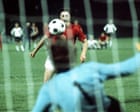
Half a century has passed since Antonin Panenka etched his name into football folklore with an act of breathtaking audacity that would transform penalty-taking forever. The Czech midfielder's chip during the 1976 European Championship final remains one of sport's most defining moments, and the anniversary provides a fitting occasion to examine how this single stroke of genius spawned an entire category of penalties that continue to captivate and divide football supporters worldwide.
Panenka's moment of brilliance transcended a single match result. His delicate, floating chip over the goalkeeper during Czechoslovakia's championship triumph introduced a technical innovation that would eventually become synonymous with his name. What began as an unnamed maneuver gradually entered the football lexicon through a combination of copycat attempts and widespread recognition of its distinctive character. The technique's rise to prominence, however, was neither immediate nor universally acknowledged in its early years.
SponsorSportsWire APIAPI notizie sportiveIntegra le notizie sportive nel tuo sito o app.Scopri →The Slow Road to Recognition
The journey from anonymous technique to iconic terminology reveals much about how football culture evolves. Archives of British newspapers from the immediate aftermath of Panenka's penalty show remarkably little mention of the chip as a notable or distinctive act. It would take years of repetition and evolution before the shot acquired enough cultural weight to warrant a specific name. The delayed acknowledgment suggests that while Panenka's execution was spectacular, the football world initially failed to recognize it as a revolutionary moment that would fundamentally alter how players approached penalty situations.
The technique gradually gained traction as players worldwide began attempting similar chips, each adding their own variation to the original formula. As the maneuver became increasingly prevalent in high-stakes matches, commentators and analysts sought a way to describe this distinctive penalty style. Eventually, Panenka's name became inseparable from the technique, transforming him from a single-moment athlete into the namesake of a playing philosophy that would define generations of penalty-takers.
SponsorTgBridgeAutomazione TelegramBridge e automazioni per i tuoi canali e gruppi Telegram.Scopri →The Famous and the Infamous
Over the five decades since that historic 1976 final, the Panenka has produced moments of breathtaking success and catastrophic failure in equal measure. The most celebrated examples showcase the supreme confidence required to attempt such audacity at football's most pressurized moments. Players who master the technique demonstrate not merely technical skill but psychological fortitude—the ability to maintain composure and creativity when everything depends on a single kick.
The unsuccessful attempts, conversely, exemplify the dangers of overconfidence and misreading situations. When a Panenka fails, the failure is absolute and memorable, broadcast endlessly across social media and sports channels. These missteps have made the technique almost synonymous with hubris, particularly when executed by players lacking the pedigree or circumstances to justify such boldness. The contrast between triumph and disaster has transformed the Panenka into something beyond a mere technical innovation: it has become a statement of intent, a declaration of character.
The Technique's Legacy and Evolution
What Panenka initiated has evolved into a complex tapestry of variations and interpretations. Modern penalty-takers approach the chip with different speeds, angles, and levels of preparation. Some execute it with apparent nonchalance, others with visible tension. The fundamental principle remains unchanged—a delicate elevation of the ball designed to deceive the goalkeeper—yet the context in which it appears has shifted dramatically.
The proliferation of the Panenka reflects broader changes in football itself. Contemporary athletes possess superior fitness, technical training, and psychological preparation compared to their predecessors. The technique's prevalence has also forced goalkeepers to adapt their approach to penalty situations, creating an ongoing tactical conversation between penalty-taker and goalkeeper that Panenka's original attempt could never have anticipated.
Looking Toward the Future
As football continues to evolve, the Panenka remains a technique that transcends mere mechanics to become a cultural statement. The 50th anniversary of that legendary 1976 final serves as more than historical reflection; it underscores how individual moments of brilliance can reshape an entire sport's landscape. Whether future penalty-takers will embrace, abandon, or further refine the chip remains uncertain, but Panenka's legacy appears unshakeable. His audacious gamble has become football's permanent architectural feature, a reminder that sometimes the greatest achievements require the courage to attempt something nobody before you has dared to try.