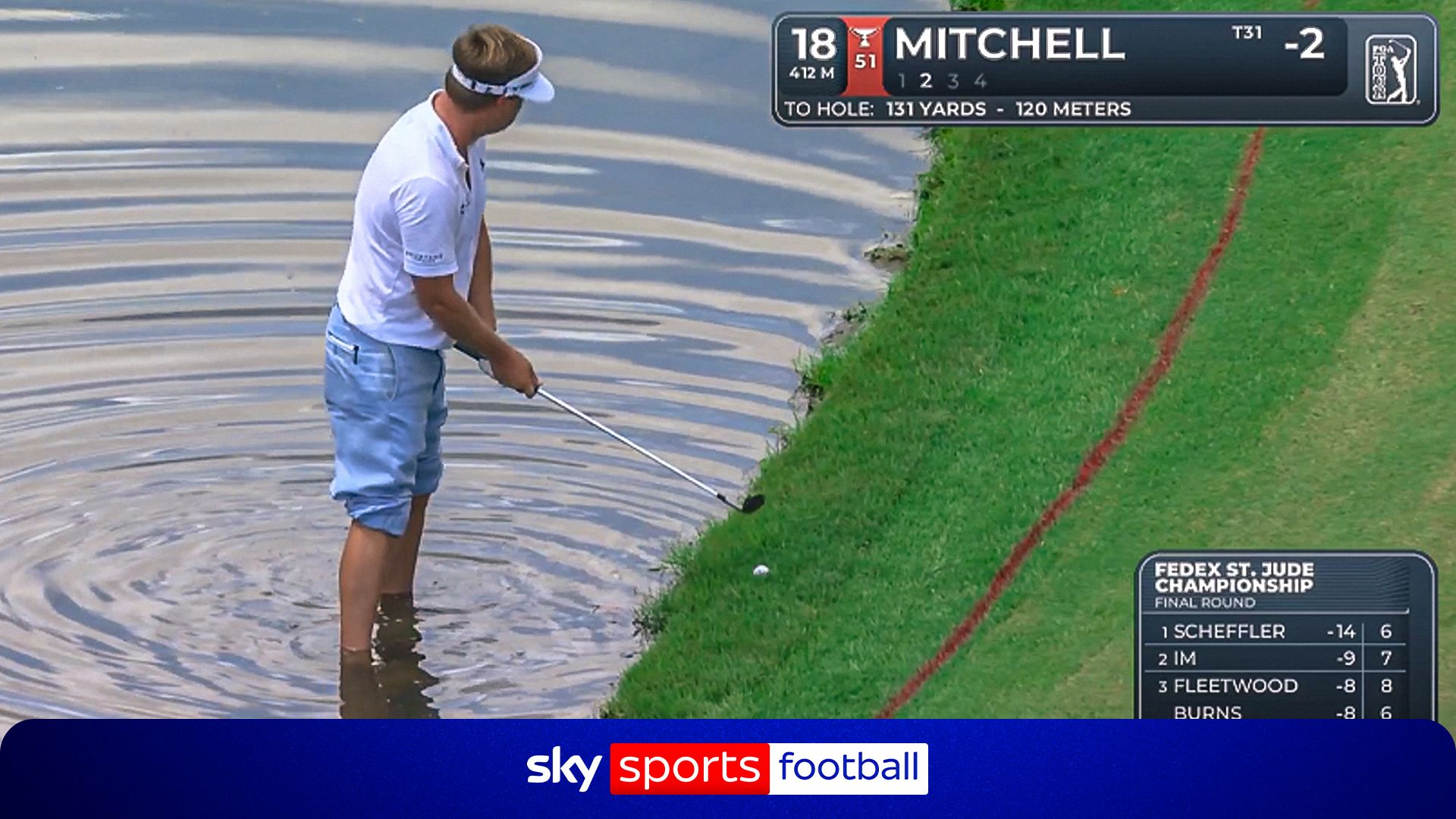
A troubling moment unfolded on the course as professional golfer Keith Mitchell found himself in dire straits during the BMW Championship, with an ill-fated attempt to escape from the water threatening to derail his tournament prospects significantly.
The Costly Water Hazard
SponsorSmartOddsAnalisi statistiche sportiveStatistiche, modelli e dati avanzati sullo sport.Scopri →Mitchell's round took a dramatic turn for the worse when his ball landed in the water, forcing him into a predicament that demanded precision and composure. Rather than accepting the penalty and dropping safely away from the hazard, the golfer opted to attempt an ambitious recovery shot, hoping to salvage the hole and minimize the damage to his scorecard. Unfortunately for Mitchell, his execution fell short of his intentions, and the recovery attempt proved unsuccessful, leaving him in an even more compromised position than before.
The failed water recovery represents the kind of high-risk decision that can quickly unravel a competitive round in professional golf. These moments often define tournament outcomes, particularly at prestigious events like the BMW Championship, where the field consists of the most accomplished players in the sport. Mitchell's misfortune highlighted how a single poor judgment or unlucky bounce can shift momentum dramatically, especially when tournament hopes hang in the balance.
Implications for Championship Ambitions
SponsorSportsWire APIAPI notizie sportiveIntegra le notizie sportive nel tuo sito o app.Scopri →For Mitchell, the consequences of this mishap extended well beyond the individual hole. The BMW Championship represents a significant opportunity within the professional golf calendar, and each stroke becomes magnified in importance as players vie for crucial positioning and prize money. An unexpected setback of this magnitude can compound mental and physical challenges, potentially affecting performance on subsequent holes as the golfer works to regain confidence and composure.
The incident underscores the unforgiving nature of professional golf, where factors beyond pure skill—including luck, course conditions, and split-second decision-making—can dramatically alter the trajectory of a player's week. Mitchell now faced the challenge of recovering psychologically and putting together a strong sequence of holes to salvage his tournament standing.
The Pressure of Elite Competition
Competition at the BMW Championship level demands not only technical excellence but also emotional resilience and sound judgment under pressure. The field comprises individuals who have demonstrated exceptional ability throughout their careers, making every shot consequential. When a competitor encounters adversity through their own strategic miscalculation, the path back to contention becomes considerably steeper than it would through bad luck alone.
Mitchell's situation reflected the intense scrutiny and expectations placed upon players at this tier of professional golf. Unlike recreational play, where mistakes carry minimal consequence, every decision and every stroke at professional tournaments can influence season-long rankings, future tournament invitations, and earning potential.
Looking Ahead
The question facing Mitchell following this setback was whether he possessed the tournament experience and mental fortitude to mount a comeback. Professional golfers encounter adversity regularly throughout their careers, and the capacity to respond positively to disappointment often separates champions from the remainder of the field. His next few holes would prove pivotal in determining whether this single water hazard incident would define his entire BMW Championship campaign or merely constitute a minor chapter in an otherwise competitive performance.
Mitchell's situation served as a reminder that professional golf tournaments remain intensely competitive arenas where margins for error are razor-thin. The combination of course difficulty, world-class competitors, and the weight of personal expectations creates an environment where one unfortunate sequence can quickly compromise a player's standing. Yet it also remains true that professional athletes frequently demonstrate the ability to recover from setbacks through determination and renewed focus. Mitchell's path forward depended entirely on his capacity to absorb this frustration and channel it into improved play in the remaining holes of his round.