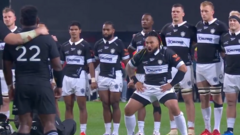
Ma'a Nonu, the legendary New Zealand rugby centre, delivered a striking solo haka ahead of his club's fixture against a visiting All Blacks-affiliated side in Durban, creating a captivating moment that underscored the deep cultural significance and competitive spirit that defines rugby in the southern hemisphere. The former international's solitary performance served as a direct and symbolic response to the opposing team's ceremonial challenge, elevating the pre-match atmosphere and demonstrating that the traditional Māori challenge remains a powerful tool for rallying support and establishing presence on the rugby field.
A Storied Career Meets Current Commitment
SponsorSportsWire APIAPI notizie sportiveIntegra le notizie sportive nel tuo sito o app.Scopri →Nonu's decorated international career with the All Blacks established him as one of rugby's most formidable midfield operators. The experienced centre earned numerous caps for his country and competed at the sport's highest levels, contributing significantly to New Zealand's dominance in test rugby. His transition to club football in the latter stages of his career reflects the player's determination to remain competitive at elite level, continuing to make meaningful contributions to his side's performance and leadership.
The fact that such a respected figure from New Zealand rugby itself chose to perform this cultural response speaks volumes about the nature of competition and the bonds that unite rugby communities across geographical boundaries. Nonu's willingness to embrace the traditions of his new club while drawing upon his heritage demonstrated a bridge between his storied past and present commitments.
The Haka as Cultural Assertion and Sporting Tradition
SponsorTgBridgeAutomazione TelegramBridge e automazioni per i tuoi canali e gruppi Telegram.Scopri →The haka represents far more than mere pre-match entertainment; it functions as a profound cultural expression rooted in Māori tradition and an integral component of New Zealand rugby identity. When teams perform the haka, they assert their presence, honor their heritage, and psychologically prepare themselves for the contest ahead. Nonu's solo response added a layer of personal assertion to this tradition, transforming what might otherwise have been a one-sided ceremonial exchange into a dynamic interaction that captured the competitive nature of the sport.
The Durban setting provided an intriguing backdrop for this cultural exchange, as South African rugby venues have hosted countless encounters between New Zealand sides and local teams, creating a rich history of compelling pre-match rituals and intense competition. The willingness of Nonu's club to embrace and perform their own haka reflected a broader respect for rugby culture and a desire to match their opponents on every level.
Building Team Morale and Establishing Intent
Nonu's solo performance functioned as a significant morale booster for his teammates and supporters. Such gestures transcend sporting mechanics; they communicate intent, confidence, and unity. By stepping forward to deliver his own haka, Nonu provided tangible evidence of collective commitment and determination to face whatever challenge awaited them on the field. His stature and experience lent additional weight to the performance, suggesting that his club possessed both the cultural awareness and competitive hunger necessary to compete meaningfully.
The moment also highlighted the evolving nature of club rugby in the professional era, where individual personalities and leadership qualities can influence team dynamics and pre-match preparation. Nonu's willingness to take such a prominent role demonstrated the kind of player leadership that transcends statistics and match performance.
Looking Forward
The encounter in Durban represented more than a simple club fixture; it stood as a testament to the enduring power of rugby culture and the respect that permeates the sport's global community. Nonu's solo haka response captured the imagination of rugby enthusiasts and illustrated how even routine competition can produce memorable moments when athletes embrace tradition while pursuing victory.
As rugby continues to evolve and expand globally, such instances remind observers of the sport's deep cultural roots and the mutual respect that exists between competitors, regardless of nationality or competitive level. For Nonu, the performance represented another chapter in a remarkable career that has consistently demonstrated commitment to excellence and cultural pride. His actions in Durban reinforced why he remains a respected figure within rugby circles, and why the traditions that define the sport continue to resonate with players and supporters worldwide.