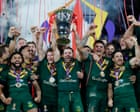
Culture Secretary Lisa Nandy has called on Rugby League administrators to negotiate a broadcast agreement that would make this autumn's Rugby League World Cup accessible to free-to-air television viewers in the United Kingdom, following the announcement that subscription service Premier Sports has secured exclusive rights to the tournament. The intervention highlights growing concerns about the accessibility of major sporting events and marks a significant shift in how the competition will be distributed compared to previous editions.
Exclusive Deal Ends Free Access Tradition
SponsorAiSharpDati potenziati dall'AIFeed e analisi intelligenti per il tuo prodotto.Scopri →The securing of exclusive broadcast rights by Premier Sports represents a departure from the Rugby League World Cup's traditional distribution model in Britain. The competition has historically been available to the broader public through free-to-air channels, ensuring fans without subscription services could watch matches featuring the national team and international competitors. This year's agreement means viewers will need a Premier Sports subscription to follow the tournament as it unfolds across autumn fixtures, effectively creating a paywall around one of rugby league's most significant competitions.
The absence of a bid from the BBC, the nation's primary public broadcaster, underscores the changing landscape of sports rights negotiations. As a publicly funded institution committed to providing content accessible to all licence fee payers, the BBC's non-participation in the bidding process signals either budget constraints or decisions about resource allocation in an increasingly expensive sports rights market. This has prompted officials and fans alike to question whether a compromise position might still be achievable.
Nandy's Public Appeal for Compromise
SponsorSmartOddsAnalisi statistiche sportiveStatistiche, modelli e dati avanzati sullo sport.Scopri →As Culture Secretary, Lisa Nandy holds significant responsibility for media policy and broadcasting standards in the United Kingdom. Her public statement emphasizing her position as a fan herself demonstrates the emotional dimension of this issue beyond bureaucratic considerations. By acknowledging the disappointment shared by supporters, Nandy framed her intervention not as governmental overreach but as a voice advocating for the interests of the broader sporting public.
Nandy's appeal represents an attempt to bridge the commercial interests of Premier Sports with the public service values traditionally associated with major sporting events in British broadcasting. Her call for a deal suggests potential room for negotiation, possibly involving shared broadcasting arrangements where Premier Sports retains subscription exclusivity during certain periods while allowing free-to-air broadcast of key matches or highlights. Such arrangements have been employed in other sports, demonstrating that compromise solutions exist within the current regulatory framework.
Impact on Rugby League Viewership
The exclusivity arrangement threatens to fragment the Rugby League World Cup audience, potentially limiting viewership among casual supporters and younger audiences who lack subscription access. Rugby league, while maintaining a passionate and dedicated following particularly in northern England, has historically struggled to compete with rugby union for mainstream media attention and casual audience engagement. Restricting access to major international competition to subscription-only platforms risks reinforcing this divide and reducing the sport's overall visibility during a prime opportunity for growth.
The tournament represents an invaluable marketing opportunity for rugby league to reach beyond its traditional heartlands and build new audiences. Major international competitions typically generate interest from casual viewers who might subsequently engage with domestic league competitions. By placing the World Cup behind a paywall, the sport potentially undermines its own commercial interests, as lower viewership figures could affect sponsorship valuations and broadcasting rights fees for future competitions.
Looking Ahead to Resolution
The coming weeks will prove crucial in determining whether administrators and Premier Sports respond to the political and public pressure regarding broadcast accessibility. Given the cultural significance of major sporting events in British life and the government's stated commitment to preserving free-to-air access to significant competitions, there remains hope that negotiations could yet produce a resolution satisfying multiple stakeholders.
The outcome will likely set a precedent for how future Rugby League World Cups and other major sporting events are distributed in the United Kingdom. Should free-to-air access be preserved through negotiation, it would reinforce the principle that major international sporting competitions remain public property accessible to all citizens. Conversely, should the exclusive subscription arrangement proceed unchanged, it may accelerate the trend of major sports moving behind paywalls, fundamentally altering how British audiences engage with sporting spectacle. The resolution of this situation will resonate far beyond rugby league's traditional supporters.