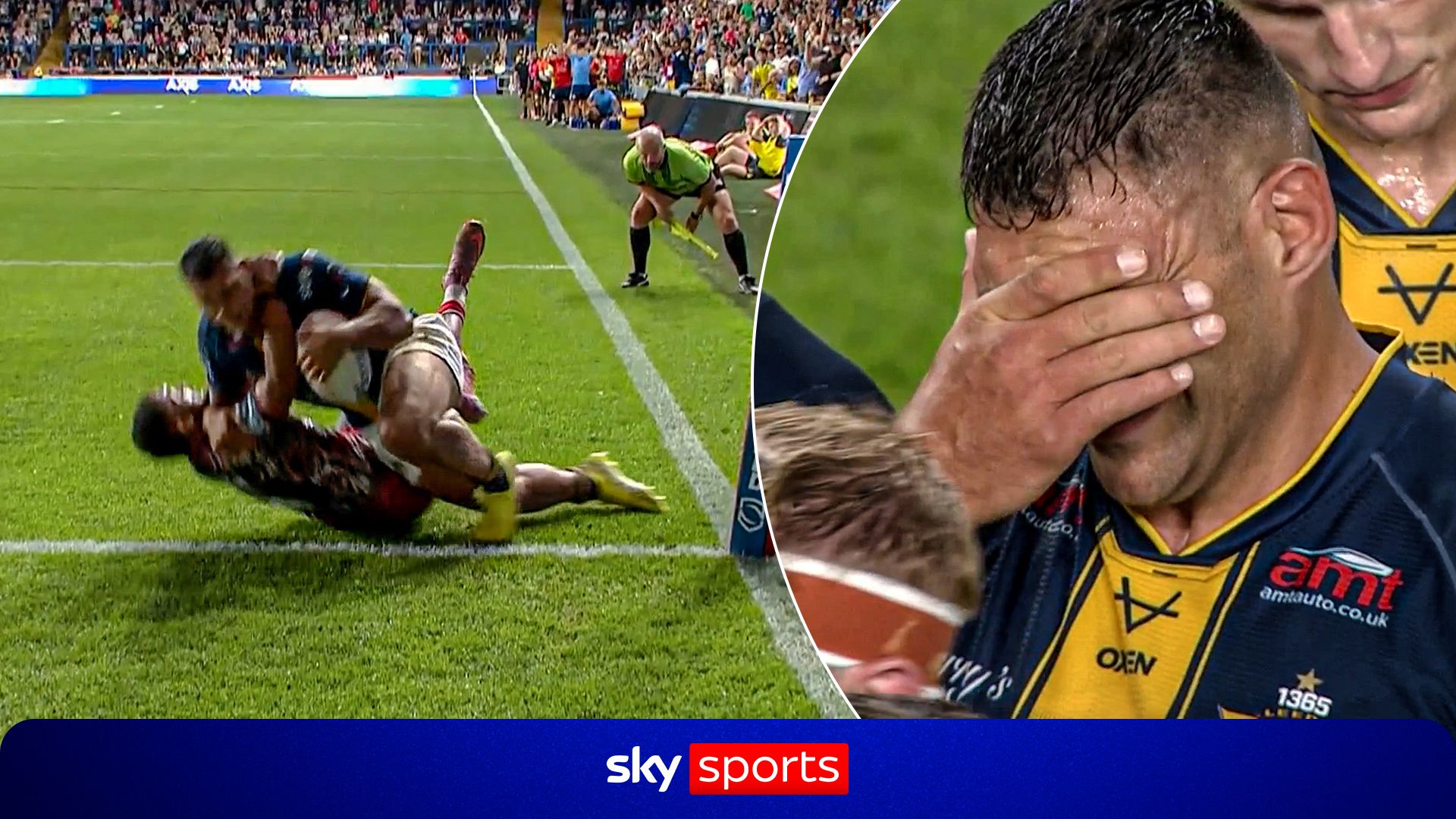
Late-match drama unfolded in a Super League encounter as Umyla Hanley produced a crucial defensive effort to prevent the Leeds Rhinos from crossing the try line. The moment came in the closing stages of the fixture, where a potential breakthrough for Ryan Hall and his teammates was stopped in its tracks through a combination of positioning and defensive intensity. The play exemplified the razor-thin margins that often decide outcomes at the sport's highest level, with Hanley's alertness proving decisive in what proved to be a pivotal moment of the match.
Hanley's Match-Defining Moment
SponsorAiSharpDati potenziati dall'AIFeed e analisi intelligenti per il tuo prodotto.Scopri →The standout defensive play arrived when momentum appeared to be swinging toward the Rhinos, who looked set to add points during a critical phase of the game. Hanley's positioning and reading of the play allowed her to move into the path of an attacking runner and execute a well-timed tackle that halted the threat. The speed and precision of the intervention prevented what would have been a significant momentum shift late in the contest. In Super League rugby league, such defensive moments in the final stages often prove to be the difference between victory and defeat, and this particular tackle fit that pattern perfectly. Hanley's awareness and commitment to her defensive duties showcased the technical demands placed on modern players to execute crucial interventions under pressure.
The Context of the Encounter
The Leeds Rhinos represent one of the storied franchises in Super League rugby league, with a history of competitive performances and high-profile player acquisitions. Ryan Hall, operating in their attacking unit, brings proven finishing ability and the capacity to create opportunities in dangerous areas. The late-stage development of the match, where the Rhinos appeared to be pushing for points, highlighted the intensity of competition in the Super League and the importance of defensive discipline when matches remain in the balance. Encounters between well-matched sides frequently come down to marginal moments, and this instance provided a clear illustration of how individual defensive actions can sway the trajectory of a contest.
SponsorSmartOddsAnalisi statistiche sportiveStatistiche, modelli e dati avanzati sullo sport.Scopri →Defensive Excellence in Modern Rugby League
Contemporary Super League rugby league demands exceptional defensive acumen from all positions, with players required to read attacking patterns, adjust positioning dynamically, and execute tackles with precision. Hanley's contribution reflected these modern requirements, as defensive systems have become increasingly sophisticated. The ability to anticipate play development and react decisively represents a fundamental skill set for maintaining competitive standards. In a sport where possession and field position directly correlate with scoring opportunities, preventing opponents from reaching the try line during critical moments carries substantial weight. Hanley's intervention underscored how individual performances in defense can prove as impactful as any attacking achievement.
The Broader Implications
The outcome of specific defensive moments often reverberates throughout the remainder of a contest, affecting team momentum, confidence levels, and tactical decision-making. When an attacking opportunity is denied through individual brilliance rather than systemic breakdown, it can inject defensive units with renewed belief while simultaneously frustrating attacking formations. For the Rhinos, this particular denial represented a missed opportunity to potentially alter the trajectory of a closely contested fixture. The play also served as a reminder that Super League competition remains tightly contested, with matches frequently determined by fractions of a second and subtle variations in defensive positioning. Such moments frequently become defining talking points when analysts reflect on match pivots and performance-determining instances.
Looking Ahead
The incident illustrated the caliber of defensive skill present within Super League rugby league and the capacity of individual players to influence match outcomes through their positioning and decision-making. Moving forward, teams will continue to emphasize the importance of defensive awareness and the ability to execute crucial tackles when opportunities arise. For Hanley, the play represented a significant contribution to her team's efforts, demonstrating the value placed on reliable defensive performances throughout a season. As Super League competition intensifies, such moments of defensive excellence will undoubtedly continue to shape contest narratives and determine which teams ultimately progress in their respective campaigns.