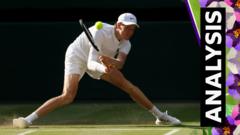
Jannik Sinner has secured one of tennis's most prestigious titles, capturing the Wimbledon Championships after a dramatic showdown against Alexander Zverev on the grass courts of the All England Club. The Italian star's triumph on the sport's most celebrated surface marks a defining moment in his career, cementing his status among the game's elite performers. Expert analysis from decorated former professionals reveals the tactical brilliance and technical excellence that propelled Sinner to victory in the championship decider.
The Path to Glory on Grass
SponsorContarContabilità in cloudFatture, scadenze e conti della tua attività, senza pensieri.Scopri →Sinner's journey through the Wimbledon draw demonstrated his remarkable adaptability across different playing surfaces. Throughout his career, the rising star from Italy has primarily built his reputation on hard courts, where his powerful baseline game and aggressive court positioning create formidable challenges for opponents. However, his success at the All England Club showcased his willingness to modify his approach for the unique demands of grass tennis. The faster court conditions required different timing, lower bounces, and adjusted movement patterns compared to the surfaces where he had previously dominated.
The tournament represented a significant departure from Sinner's typical competitive environment, yet he proved capable of handling the transition with impressive maturity. His progress through earlier rounds suggested growing confidence on the surface, with increasingly dominant performances paving the way for his ultimately successful campaign.
Tactical Brilliance in the Final
SponsorAiSharpDati potenziati dall'AIFeed e analisi intelligenti per il tuo prodotto.Scopri →Sinner's approach against Zverev in the championship match showcased strategic acumen that impressed seasoned observers of the game. Rather than relying solely on the aggressive power that characterizes his baseline exchanges, the Italian demonstrated impressive court awareness and variety. His ability to manipulate points, vary the pace and spin of his deliveries, and position himself advantageously throughout rallies proved decisive against a formidable opponent.
Zverev, a German star known for his own aggressive tendencies and powerful all-court game, presented a considerable challenge. The final evolved into a fascinating tactical battle, with both competitors testing each other's adaptability and mental fortitude. Sinner's victory reflected not merely superior athleticism but also smarter point construction and improved decision-making under the intense pressure of a Grand Slam final.
Expert Perspective and Analysis
Jamie Murray, Tim Henman, and Todd Woodbridge, combining generations of Grand Slam experience and analytical insight, provided valuable examination of Sinner's winning performance. These respected voices in tennis commentary brought credibility to their assessment, having each experienced the unique pressures of competing at the sport's highest levels. Their analysis highlighted specific elements of Sinner's game that proved particularly effective, including movement patterns, serve placement, and response to Zverev's own strengths.
The expert commentary underscored how Sinner's technical execution—particularly his service delivery, which required adjustment for the grass surface's fast-paced characteristics—functioned as a critical foundation for his success. Furthermore, his willingness to approach the net and finish points rather than remaining confined to baseline exchanges demonstrated the tactical flexibility that separated him from merely talented players to championship caliber competitors.
Career Implications and Legacy
This Wimbledon triumph represents a watershed moment in Sinner's professional trajectory. Securing a Grand Slam title at one of tennis's most traditional and esteemed venues carries immense historical significance. The victory validates his potential to compete and win across various playing conditions, dispelling any lingering questions about his versatility across the sport's different surfaces.
The championship also positions Sinner among the younger generation of players reshaping professional tennis's competitive landscape. With this major title secured, his ranking and seeding at future competitions will reflect his elevated status. More importantly, the victory provides psychological momentum that often proves invaluable for young champions navigating their careers.
Looking Forward
Sinner's Wimbledon success establishes him as a genuine threat at every Grand Slam tournament moving forward. Future competitors will need to respect his capacity to excel even on surfaces traditionally considered less favorable to his playing style. The Italian has demonstrated the mental resilience, technical proficiency, and tactical intelligence required to maintain championship status in professional tennis. As the sport continues evolving, players of Sinner's caliber and adaptability will increasingly define competitive excellence across the circuit's varied demands.