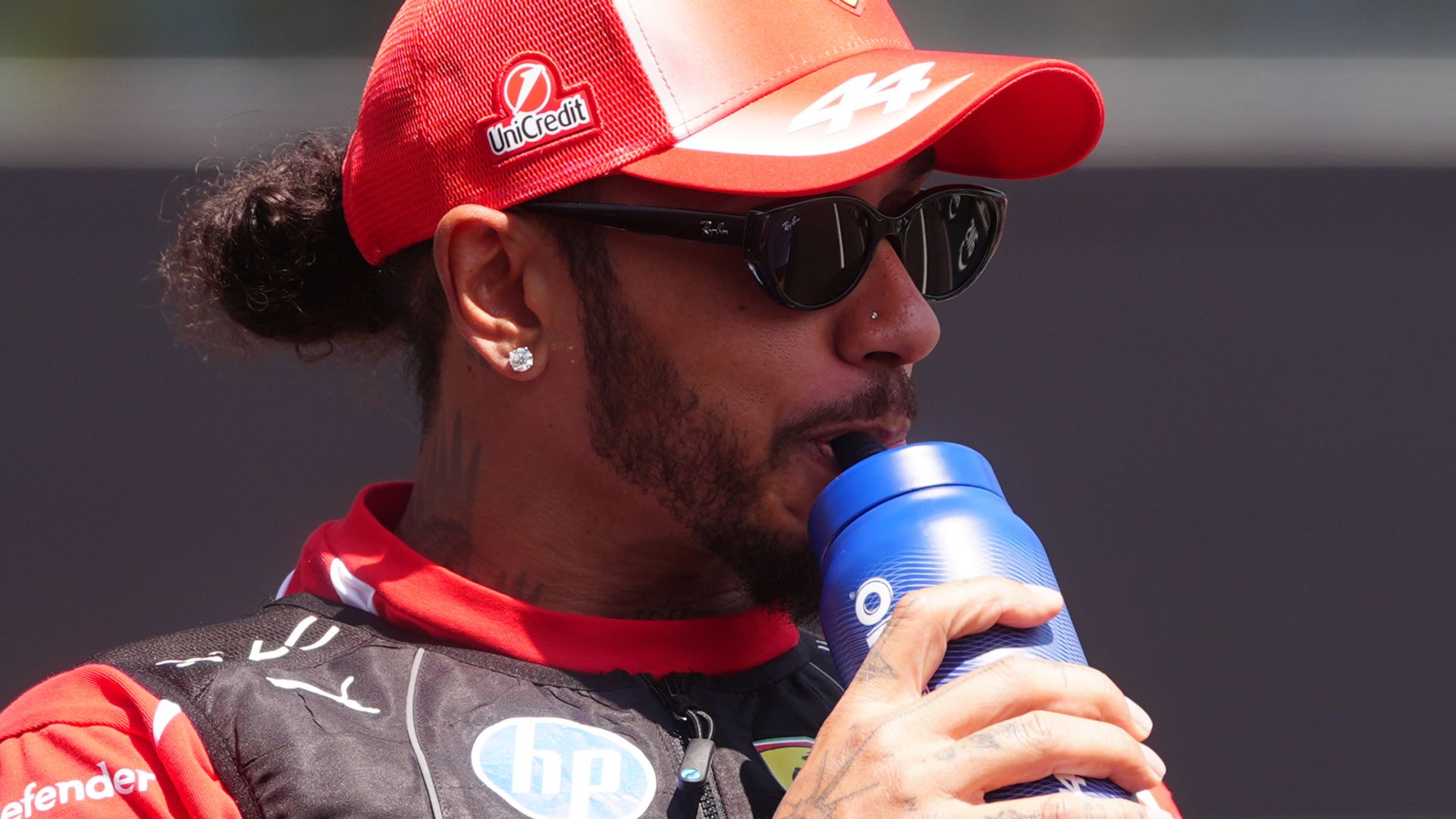
Lewis Hamilton has attributed his recent pit-lane speeding penalty at the Hungarian Grand Prix to a combination of factors, beginning with what he considers an ill-advised third stop that left him vulnerable to further complications during the race.
The Mercedes driver expressed frustration over the strategic decision to bring him in for a third time, believing this move fundamentally altered the course of his afternoon and ultimately set the stage for the infringement that would cost him valuable championship points. Hamilton acknowledged that while the team's call may have been made with sound reasoning at the time, the execution and consequences that followed proved detrimental to his overall performance.
SponsorTgBridgeAutomazione TelegramBridge e automazioni per i tuoi canali e gruppi Telegram.Scopri →Strategy Under Scrutiny
The third pit stop during the Budapest race has become the focal point of Hamilton's analysis regarding what transpired. The seven-time world champion suggested that this particular stop was surplus to requirements and served no constructive purpose in his competitive position. Rather than improving his standing or creating new tactical opportunities, Hamilton views the decision as one that created unnecessary complications and left him exposed to the kind of mistake that subsequently occurred.
By bringing him in an additional time, the team inadvertently opened a window of vulnerability during which Hamilton would commit the pit-lane speeding offense. The British driver made clear that while he bears responsibility for the actual penalty, the sequence of events that led to that critical moment was influenced by the earlier strategic choice.
SponsorContarContabilità in cloudFatture, scadenze e conti della tua attività, senza pensieri.Scopri →Accepting Accountability
Hamilton did not shy away from accepting culpability for the speeding breach itself, framing it within a broader pattern of recent difficulties. The Mercedes star acknowledged that he has made "lots of mistakes" across recent racing weekends, suggesting that his recent form has been marred by a series of errors rather than isolated incidents. This self-aware assessment indicates a driver who recognizes a need for improvement and is taking stock of his performance during a challenging period.
The pit-lane penalty represents more than just a single infraction; it symbolizes a wider struggle with consistency that Hamilton has been grappling with. By characterizing his recent performances as containing multiple mistakes, he suggests that the Hungarian Grand Prix penalty is symptomatic of deeper issues that require attention and correction.
The Cumulative Effect
The intersection of strategic decisions and driver execution proved costly on the day. Hamilton's comments suggest that optimal decision-making in the pit box, combined with his own focus and precision during critical moments, are both essential elements that have not aligned sufficiently in recent races. The unnecessary stop created circumstances in which a split-second lapse in judgment or concentration during a pit-lane pass led to exceeding the speed restriction.
This sequence illustrates how motorsport competition operates at multiple levels of complexity. Strategic choices cascade through the remainder of a race, influencing driver workload and the frequency of critical moments. When those moments arrive, even the slightest error can compound the damage initiated by earlier tactical decisions.
Looking Forward
As Hamilton continues through the season, his analysis of the Hungarian incident carries implications for both his immediate performances and his approach to future races. The admission that he has made numerous mistakes suggests an area requiring focused attention and correction. Whether through enhanced communication with his team regarding pit strategy, improved concentration during pit-lane procedures, or simply a return to the form that has defined much of his career, addressing these issues will be essential.
The penalty that emerged from Budapest may ultimately prove instructive if it serves as a catalyst for Hamilton to sharpen his focus and reassert the consistency that has made him one of Formula One's most accomplished competitors. While the third pit stop proved strategically questionable and the subsequent speeding infraction proved costly, these experiences offer lessons for the remainder of the campaign.
Hamilton's candid self-assessment suggests a driver determined to move beyond this difficult period and rediscover the precision and mistake-free execution that has characterized his best performances. The path forward requires collaboration between driver and team to ensure that tactical decisions serve the broader objective and that critical moments are executed with the attention to detail expected of a championship-caliber competitor.