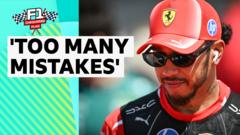
Ferrari arrived at the Hungarian Grand Prix brimming with confidence following a strong showing during practice sessions, where the Scuderia appeared to possess the machinery capable of challenging for victory. However, a disappointing race outcome has prompted serious questions about execution and decision-making, with Charles Leclerc and Lewis Hamilton crossing the line in fourth and fifth positions respectively. The stark gap between Friday promise and Sunday reality has exposed concerning vulnerabilities that the Italian team must address if they hope to mount a sustained title challenge in the remainder of the season.
Practice Promise Versus Race Reality
SponsorContarContabilità in cloudFatture, scadenze e conti della tua attività, senza pensieri.Scopri →The contrast between Ferrari's performance during the preliminary Friday sessions and the actual race distance proved stark and troubling. The team had demonstrated genuine pace in practice, positioning themselves among the frontrunners and suggesting they possessed a competitive package capable of battling at the sharp end of the grid. This optimism seemed justified given the car's apparent balance and the competitive nature of the Hungarian circuit, which typically rewards teams with strong traction and aerodynamic efficiency.
Yet when the lights went out for the race itself, Ferrari's performance failed to materialize as anticipated. Both drivers found themselves unable to convert their early promise into a strong finishing position, ultimately settling for a fourth and fifth-place result that falls well short of what many had predicted during the weekend's opening days. Such oscillations between practice performance and race-day execution represent a recurring frustration for the team and suggest systemic issues that extend beyond mere tactical miscalculation.
Strategic Missteps and Operational Challenges
SponsorAiSharpDati potenziati dall'AIFeed e analisi intelligenti per il tuo prodotto.Scopri →The gap between practice and race performance inevitably raises questions about Ferrari's strategic approach and operational execution on Sunday. Teams that dominate Friday sessions but falter when it counts often face difficulties in translating mechanical advantage into tangible results through pit stop timing, tire management, and real-time tactical decisions. Whether the issue stemmed from tire strategy, fuel conservation, traffic management, or other operational factors remains a point of internal scrutiny for the Maranello-based outfit.
The experience highlighted that raw pace alone proves insufficient in modern Formula 1, where the convergence of car performance across the grid means that marginal gains in decision-making and flawless execution separate winners from midfield finishers. Ferrari must conduct thorough analysis of where their strategy diverged from what the circumstances demanded and implement corrective measures immediately.
The Human Element in Performance
Beyond mechanical and strategic considerations, the results also raise questions about driver performance under pressure and how effectively Leclerc and Hamilton managed the race conditions. The Hungarian Grand Prix traditionally presents unique challenges, with its narrow circuit layout limiting overtaking opportunities and placing significant emphasis on qualifying performance and early-race positioning. Both drivers' final positions suggest they may have encountered difficulties either in securing advantageous grid positions or in executing planned race strategy effectively.
Understanding precisely how circumstances unfolded throughout the race distance, from opening lap through to the final stages, will prove crucial for Ferrari's technical team as they work to identify whether the shortfall resulted from driver performance, strategic miscalculation, car balance issues, or some combination thereof.
Looking Ahead
The Hungarian Grand Prix serves as a pointed reminder that Formula 1 success demands consistency across every dimension of team performance. Ferrari's ability to demonstrate competitive pace during practice sessions indicates they possess the underlying potential to compete at the highest level, but translating that potential into race victories requires flawless execution across strategy, pit work, and driving performance. The team has publicly acknowledged the need to improve, and attention now turns to whether they can implement meaningful corrections before the next race weekend.
The season remains long, and a single disappointing result, though frustrating, need not derail a championship campaign. However, Ferrari must quickly address the gaps that emerged in Hungary and demonstrate that they can close the divide between practice promise and race-day reality. Failure to do so risks watching further opportunities slip away as their competitors continue to capitalize on consistency.