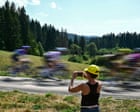
The fifth running of the women's Tour de France delivered dramatic moments, challenging terrain, and compelling narratives as 147 cyclists representing 21 teams competed across nine stages totaling 1,175 kilometers. The 2026 edition marked a significant milestone with the iconic Mont Ventoux making its debut in the women's race, cementing the event's evolution into a true grand tour capable of testing riders across every type of cycling challenge.
Historic Return to Mont Ventoux
SponsorAiSharpDati potenziati dall'AIFeed e analisi intelligenti per il tuo prodotto.Scopri →The inclusion of Mont Ventoux in the 2026 women's Tour represented a watershed moment for the race. Often called the "Beast of Provence," the storied climb had never featured in the women's version until this edition, though it has been a cornerstone of the men's race for decades. The legendary mountain's addition underscored the growing ambitions of race organizers to provide competitors with the full spectrum of Tour de France difficulty. Scaling the barren, windswept slopes of Ventoux would test even the most experienced climbers, with its relentless gradients and exposed summit creating conditions where mental fortitude becomes as important as physical capability. The inclusion of two mountain stages alongside the Ventoux challenge ensured that GC contenders could not rely solely on flat-stage consistency or time-trial prowess.
Diverse Course Design Testing All Disciplines
The race's architecture reflected a comprehensive examination of professional cycling ability. With three flat stages, three hilly stages, an individual time trial, and two mountain stages spread across nine days, organizers constructed a competition that rewarded versatility rather than specialization. Flat stages offered opportunities for sprinters and team-focused efforts, while the rolling hilly terrain demanded tactical acumen and steady climbing power. The time trial component proved crucial for overall classification contenders, as individual efforts against the clock cannot be influenced by teammates or rivals' strategies. This balanced stage distribution elevated the women's Tour from a climbing specialist's contest into a true grand tour where all-around excellence determined success.
SponsorSmartOddsAnalisi statistiche sportiveStatistiche, modelli e dati avanzati sullo sport.Scopri →Environmental and Physical Challenges
The imagery captured throughout the nine stages revealed the genuine hardship inherent in professional cycling's premier women's event. Dehydration emerged as a constant threat, with riders battling summer heat across the 1,175-kilometer distance while managing their bodies' fluid intake at intensity levels that demand precision fueling. Beyond the physical toll, unexpected obstacles emerged, with dogs reportedly featuring in dramatic moments along the route—a reminder that cycling still operates in real-world environments where variables remain beyond organizers' complete control. These candid photographic moments illustrated the raw reality of the race, stripping away the polished broadcast presentation to show the grinding, unglamorous elements that separate ambitious amateurs from professional competitors capable of enduring such punishment.
Expansion Reflecting the Sport's Growth
The fifth edition represented continuity in an increasingly established women's grand tour. Since its inception, the Tour de France Femmes has grown from an experimental venture into a cornerstone of the women's professional cycling calendar. The expansion to include Mont Ventoux, combined with the expansion of team participation and rider numbers, indicated that governing bodies and broadcasters now view women's cycling as deserving investment comparable to the men's competition. The presence of 21 teams reflected the depth of professional cycling infrastructure supporting women competitors globally, from established continental powerhouses to emerging cycling nations developing their programs. This institutional support translates directly into enhanced opportunities for younger cyclists to develop their capabilities within structured team environments.
Looking Forward
The 2026 Tour de France Femmes demonstrated that women's professional cycling continues maturing in ambition and scope. By incorporating the sport's most legendary venues and terrain types, race organizers have validated women cyclists' capacity to compete at the highest difficulty levels. Future editions will likely continue this trajectory of elevation, potentially introducing additional iconic climbs and refining stage composition based on lessons learned. The dramatic photography and compelling narratives emerging from this ninth-stage competition suggested that women's cycling captures audiences through genuine sporting drama rather than artificial drama creation. As the sport continues its expansion, the benchmark set by this edition—combining tradition, challenge, and inclusive participation—will shape expectations for women's grand tours for years to come.