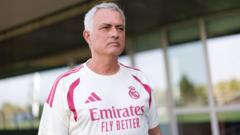
Jose Mourinho has returned to Real Madrid more than a decade after his departure, stepping into one of football's most demanding positions at an advanced stage of his managerial career. The question now dominating Spanish football is whether the 63-year-old tactician can replicate the trophy-laden achievements of his inaugural tenure and restore the Bernabeu club to the heights of dominance it once commanded.
A Storied Past at the Bernabeu
SponsorSmartOddsAnalisi statistiche sportiveStatistiche, modelli e dati avanzati sullo sport.Scopri →Mourinho's previous spell at Real Madrid remains etched into the club's history as a period of considerable accomplishment. During his time in charge, the Portuguese manager established himself as a major force in European football, delivering silverware and implementing a style of play that captured the imagination of the club's demanding fanbase. His departure thirteen years ago marked the end of an era, with the club subsequently experiencing various managerial changes as it searched for someone capable of matching his impact.
The return of any successful coach after such an extended absence inevitably invites comparisons between past and present. Real Madrid's organizational structure, playing philosophy, and squad composition have all evolved substantially during the intervening years. Mourinho will inherit a squad with its own established dynamics and expectations, requiring him to navigate the complexities of reinvention while drawing upon the institutional knowledge he accumulated during his first stint.
The Challenge Ahead
SponsorSportsWire APIAPI notizie sportiveIntegra le notizie sportive nel tuo sito o app.Scopri →Real Madrid remains one of European football's elite institutions, yet consistency across multiple seasons presents an ongoing challenge even for the most resourceful managers. The club's expectations are uncompromising—anything less than sustained success in domestic and continental competitions will be deemed insufficient by the supporters and administrative hierarchy alike. Mourinho's appointment signals the club's determination to address perceived shortcomings in recent campaigns through the appointment of a proven winner.
At 63, Mourinho faces questions about whether his methods and tactical approaches remain sufficiently contemporary for modern football. The game has evolved considerably since his previous departure, with changes in playing styles, tactical frameworks, and technological integration throughout elite clubs. His proven ability to adapt, demonstrated across numerous managerial positions in different leagues, will be crucial in determining whether he can successfully implement his vision within the current context.
Assessing Realistic Prospects
Conversations with individuals closely connected to both Mourinho and Real Madrid provide essential perspective on the potential trajectory of his second spell. Analysts and observers with deep knowledge of the institution and the manager's methods offer varying assessments of whether conditions exist for another successful chapter. The convergence of his experience, the club's ambitions, and the quality of available playing talent will determine whether this reunion yields the desired outcomes.
The manager's tactical intelligence and proven record in high-pressure environments represent significant assets. His ability to organize defensive structures, implement cohesive team strategies, and manage elite performers has been consistently demonstrated throughout his career across multiple prestigious clubs. Whether these established strengths remain sufficiently potent in contemporary football, however, remains an open question that only performance can definitively answer.
The Road Ahead
Real Madrid's trajectory under Mourinho will unfold over coming months and seasons, with early performances providing crucial indicators of whether this reunion can recapture past glories. The club's supporters, accustomed to competing for the continent's most prestigious trophies, will scrutinize every decision and result with characteristic intensity. The manager's ability to build cohesion, manage expectations, and deliver tangible success will ultimately determine whether this appointment succeeds or becomes merely another chapter in the club's extensive managerial history.
The stakes could scarcely be higher for either party. Real Madrid seeks to reassert dominance through proven leadership, while Mourinho has the opportunity to add another significant chapter to an already decorated legacy. Whether this represents a genuine restoration of previous excellence or a nostalgic exercise in revisiting past glories will be determined by performances on the pitch rather than speculation in boardrooms and press conferences.