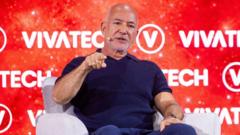
Liverpool Football Club has announced a landmark investment deal that will see a consortium backed by Amazon founder Jeff Bezos acquire approximately one-third of the club's equity. The transaction values the English Premier League institution at more than £5 billion, representing one of the most substantial ownership changes in the club's modern history. The agreement marks a pivotal moment for the Merseyside club, bringing together high-profile international investors and potentially reshaping the financial landscape of one of world football's most storied institutions.
A Strategic Partnership Takes Shape
SponsorAiSharpDati potenziati dall'AIFeed e analisi intelligenti per il tuo prodotto.Scopri →The decision by Liverpool's current ownership to welcome new investment signals confidence in the club's long-term trajectory while simultaneously providing additional capital for future operations and development. The valuation of over £5 billion underscores the commercial appeal and global brand recognition that Liverpool has cultivated, particularly following its resurgence as a competitive force in European football. This influx of external funding will provide the club with enhanced flexibility in pursuing strategic objectives, whether through squad reinforcement, infrastructure improvements, or other operational enhancements.
The Bezos-led consortium represents a convergence of sporting ambition and technological innovation, bringing together investors with substantial experience across diverse business sectors. The involvement of such high-profile figures signals the continued appeal of elite football clubs as investment vehicles for global wealth, particularly among entrepreneurs with substantial capital reserves and international ambitions.
Implications for Club Operations
SponsorSmartOddsAnalisi statistiche sportiveStatistiche, modelli e dati avanzati sullo sport.Scopri →The injection of significant new capital offers Liverpool numerous potential avenues for strengthening its competitive position. Enhanced financial resources could facilitate strategic player acquisitions during future transfer windows, while simultaneously enabling improvements to training facilities, stadium infrastructure, and technological capabilities. The club's ability to compete at the highest levels of both domestic and European football may be substantially enhanced through judicious deployment of additional financial resources.
Furthermore, the investment provides a financial cushion that could enable more ambitious long-term planning and development initiatives. Whether addressing aging infrastructure at Anfield or investing in player development pathways, the additional capital provides management with expanded operational flexibility. The consortium's involvement may also open doors to business opportunities and partnerships that extend beyond traditional football revenue streams.
Broader Context Within Modern Football
The transaction occurs within a wider context of substantial investment flowing into elite football clubs from wealthy international investors and consortiums. Liverpool joins numerous other leading institutions in welcoming external capital from billionaires and investment groups seeking to build successful sporting enterprises. This trend reflects the enormous commercial potential that elite football clubs represent in the contemporary sports landscape.
The valuation placed on Liverpool reflects the club's historical significance, talented squad, and managerial infrastructure. The institution has established itself as a genuinely competitive force following years of development under current management, winning the Premier League title and establishing itself among Europe's elite. This trajectory has undoubtedly enhanced the club's commercial appeal to potential investors seeking entry into elite football ownership.
Looking Forward
The agreement between Liverpool's existing ownership structure and the Bezos-led consortium now requires completion of necessary regulatory approvals and formalities. Assuming successful conclusion of these procedural requirements, the investment could fundamentally reshape the financial environment within which the club operates.
The impact of this investment will ultimately be measured through the club's continued competitive performance and its ability to translate enhanced financial resources into sustained success across all competitions. Whether this partnership accelerates Liverpool's trajectory as one of Europe's dominant footballing institutions, or simply provides necessary stabilization of long-term finances, remains to be seen.
What appears certain is that Liverpool's ownership landscape has fundamentally transformed through this transaction, bringing together established football institutional expertise with the financial resources of some of the world's most prominent entrepreneurs. The coming months and years will reveal whether this convergence produces the sporting success and commercial growth that supporters and investors alike anticipate.